陽光甜味咖啡館 Sun Sweet Cafe

We meet right here every Tuesday, Friday and Saturday evening.

Dare to dream!

勇敢夢!

LOVE YOURSELF!

愛自己!

周六(11/24)1.如何選市長?2.性格預測了快樂

板橋區文化路一段421巷11弄1號 (陽光甜味咖啡館)
新埔捷運站1號出口 旁邊7-11巷子進入20公尺 看到夏朵美髮左轉    星期六 聚會時間為下午4:00-6:00
「man in suit」的圖片搜尋結果
如何選市長?
How to Run for Mayor

    Become involved in community initiatives. As mayor, you’ll be involved in numerous aspects of the local community. You can get a head-start in local politics and government by becoming involved in community initiatives. Local community centers, churches, hospitals, or charities are a great place to get started.
Introduce yourself to community leaders and become an outspoken member of your city or town.
        Volunteer opportunities could include cleaning up a local park or serving soup at a homeless shelter.
        Network with those that are working to improve the conditions of the community you're living in.

    Build relationships with local businesses. The economy is an important aspect of any mayoral campaign. Introduce yourself to local businesses and develop relationships with them. Local companies will be interested in how you will affect their business if you're elected. Assure businesses that, once you're in office, you'll support policies that can help them.
        Get an understanding of the biggest businesses in your town or city and the issues that they regularly face.
        Identify the major industries in your area by finding statistics about the local economy and identifying the industries that are thriving.
        You can also gather data by asking local business owners questions about the economy in the area.
   
    Get experience by managing in the private sector instead. Any job that requires you to represent and manage a large number of people can provide the springboard you need to run for mayor. Make sure that your job requires you to make large management decisions or set company-wide policies. Before you run for mayor, you must have a proven track record in a leadership position.
        Examples of leadership positions include CEO, president, partner, or chief operations officer.
        Ex-mayor of New York City, Michael Bloomberg was in business for four decades before he decided to run for mayor.
        You should have enough experience to demonstrate that you can effectively lead people.

    Create a committee in larger cities. Most cities and some larger towns will require that you create a committee before you can declare your candidacy for mayor. The committee will become your election campaign team. Your committee needs to be established so that the government can track your campaign’s finances to make sure that your campaign is legal. A committee will have to include, at a minimum, a treasurer and chairperson.
      
 Select people who have experience in politics or running a campaign.

    Get a petition and the required signatures that you need. Pick up a petition to run for mayor from your city clerk. Most cities and towns require that you get signatures from citizens before you can be nominated as a candidate. The number of signatures that you need varies depending on how large your city is and how many residents it has. Try to get signatures from all the people you know first, then send out a canvassing team with your petition to get more signatures.
 「happiness」的圖片搜尋結果
性格預測了快樂
Does Your Personality Predict Your Happiness?      greatergood.berkeley.edu

Extraverts are happier, and so are the emotionally stable, personality researchers tell us. It also pays to be more open to new experiences, more agreeable, and more conscientious. What does that mean for the rest of us—the introverts, the neurotics, the disorganized?

You may recognize these personality dimensions as part of the Big Five, the traits that researchers are often referring to when they talk about personality. According to a 2008 review, the Big Five explain anywhere from 39 to 63 percent of the variation in well-being between people.

That’s enough to be discouraging, if you don’t fall into one of the “beneficial” categories. But don’t lose heart yet, the authors of a new study say. Each Big Five domain can be divided into two “aspects”—enthusiasm and assertiveness rather than simply “extraversion,” for example—and, it turns out, one of each pair is more predictive of well-being than the other.
Advertisement X

In other words, rather than lumping ourselves (and others) into broad categories, we’d do better to understand these nuances and what they might mean for our pursuit of happiness.

In this study, researchers surveyed over 700 U.S. residents about their personality and their well-being. The personality questions (which you can answer for yourself) covered the ten aspects of the Big Five:

    Extraversion includes enthusiasm (being friendly and sociable) and assertiveness (dominating social situations).
    Neuroticism includes withdrawal (tending toward depression and anxiety) and volatility (tending toward anger).
    Conscientiousness includes industriousness (being hard-working and self-disciplined) and orderliness (being organized and preferring routines).
    Agreeableness includes compassion (being caring and empathic) and politeness (being respectful).
    Openness to experience includes openness (being creative and appreciating beauty) and intellect (being curious and reflective).

For well-being, researchers didn’t simply ask participants how happy they were. Their questions reflected three scientific measurements of well-being, capturing different visions of the good life. They asked about everything from feeling positive and satisfied with life, to experiencing a sense of meaning and purpose, to having loving and warm relationships, to feeling autonomous and in control.

In the end, the results offered greater clarity about the link between personality and well-being. Extraverted participants were indeed happier—but drilling down deeper, they found it was the more enthusiastic ones who tended to report higher life satisfaction, more positive emotions, and better relationships.


週四 (11/22)1.同性婚姻權公投 2.一個人會快樂嗎?

板橋區文化路一段421巷11弄1號 (陽光甜味咖啡館)
埔捷運站1號出口 旁邊7-11巷子進入20公尺 看到夏朵美髮左轉    PM 7:00-9:30
「同性婚」的圖片搜尋結果
同性婚姻權公投
Same-sex marriage rights in Taiwan at risk in referendums    asia.nikkei

TAIPEI -- Victoria Hsu plans to wed her partner as soon as same-sex marriage becomes legal in Taiwan next May.

"We have waited so long for this day and we have been through many ups and downs," the 46-year-old human rights lawyer told the Nikkei Asian Review. "While heterosexual couples can get married in 30 minutes, we've had to fight for decades to formulate legal documents ourselves, to initiate lawsuits ourselves, to go through endless debates for equal rights ourselves."

"It's been a very very long journey," said the prominent lesbian rights activist.

But Hsu's plans may be dashed if conservative forces win out in a series of referendums on gay rights being held Nov. 24, and manage to limit the rights of gays wanting to wed. Five out of 10 plebiscites will be questions on issues such as education about homosexuality and regulations on same-sex marriage.

In the first such ruling in Asia, Taiwan's constitutional court said in May 2017 that same-sex couples have the right to be legally married. The court gave the island's legislature two years to legalize gay marriage, but said homosexual partners can be married from May 2019 even if the law has not been formally amended.

But with little progress made on changing the current act, conservatives have been calling for a new law to regulate same-sex couples' rights. Despite the island having many gay-friendly spots and hosting one of the region's biggest LGBT parades, Hsu and other activists are concerned they may end up with limited freedom to marry.

Taiwanese President Tsai Ing-wen campaigned on a promise of marriage equality in the 2016 general election, but said this year that society is still divided. Her Democratic Progressive Party has been reluctant to push ahead on same-sex marriage legalization, fearing it would have a negative impact in some of the local elections taking place the same day.

Recent polls show a majority of people are against same-sex marriage. A survey by the Taiwanese Public Opinion Foundation showed as many as 77% of respondents agreed that the Civil Code should limit permanent unions to those between a man and a woman.

Conservative groups put three votes on the ballot. These referendums are aimed at restricting gay-marriage rights, and banning same-sex education in schools. Gay-rights activists put up two separate votes to counter such moves.

"We were so disappointed about the court ruling that we felt we must do something to protect the definition of marriage as between man and woman -- to preserve the traditional culture," said Sun Gi-cheng, chairperson of Stability Power, a group that pushed for the anti-same-sex-marriage referendums.
 「happy」的圖片搜尋結果
一個人會快樂嗎?
Can You Live Alone and Be Happy?  Psychology Today
A social phenomenon is sweeping the world. From Kenya to the UK, people are living alone in increasing numbers. These aren't temporary situations, like students or recent graduates. In fact, those living alone are more likely to remain in that situation than any other group except married couples.

In the US, 28% of all households are people living alone. Worldwide, more people are living alone than at any other time in history. Living alone appears to be tied to a market economy (people move around in the pursuit of better jobs), the welfare state (growing old is no longer a sentence to poverty without children to support you) and the women's movement (there is less need to be dependent upon men for support).

Does this mean that we are headed down the path where the Beatles' Eleanor Rigby is the universal anthem: All those lonely people/Where did they all come from? Not at all, says sociologist Eric Klinenberg.

Klinenberg's research doesn't turn up lonely people or social isolates. He writes that "people who live alone compensate by becoming more socially active than those who live with others and that cities with high numbers of singletons enjoy a thriving public culture."

In his March 12 Time magazine article he writes, "Living alone allows us to do what we want, when we want, on our own terms. It liberates us from the constraints of a domestic partner's needs and demands and permits us to focus on ourselves."

He states: "After all, living alone serves a purpose: it helps us pursue sacred modern values-individual freedom, personal control and self-realization-that carry us from adolescence to our final days."

So living alone doesn't mean that people are lonely or unhappy; neither does it mean that people are less social. But it may mean that people are more self-centered and therefore less concerned about larger social issues.

A study published in the Journal of Personality and Social Psychology, which studied attitudes over a 40-year span, found that today's young Americans are less concerned about the environment than older generations. One frustrated environmentalist said about her peers, ""I just think our generation seems fairly narcissistic-and we seem to have the shortest attention span."


Living alone is part of a pattern of self-realization that easily gets translated into indifference. If you need to think about another's needs on a regular basis, as you do when you live with someone else, then your thinking is stretched beyond the present moment. You can't live successfully with another person with a short attention span. You must pay attention when you are a partner.

週二(11/20)1.媒體與韓風選舉2.給壓力的人

板橋區文化路一段421巷11弄1號 (陽光甜味咖啡館)
埔捷運站1號出口 旁邊7-11巷子進入20公尺 看到夏朵美髮左轉    PM 7:00-9:30
「韓國瑜漫畫」的圖片搜尋結果
媒體與韓風選舉
Final countdown for elections! KMT's Han Kuo-yu takes his campaign rally in Gangshan | The China Post
KMT's Han Kuo-yu, the Kaohsiung mayoral candidate, manages to overtake his DPP rival in popularity just within a matter of months against almost impossible odds.

Taipei, Nov. 15-Who will be the next mayor of Kaohsiung? The final countdown for Kaohsiung’s staging of the Taiwanese municipal elections makes the battle become more intensive than before.

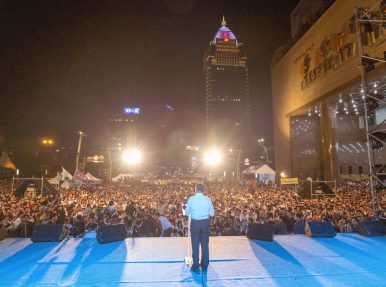
Han Kuo-yu (韓國瑜) attended to a campaign rally in Gangshan(岡山) at night of Nov. 14, attracting more than 100 thousands of supporters, singing military song and even waving their cell phones with lights to welcome the most ideal candidate for them.

This rally is the final stop in the plan of KMT to take over three important constituencies-Fengshan(鳳山), Qishan(旗山) and Gangshan(岡山). KMT held the rally in a community of military dependents, aiming to get more votes from locals who are dissatisfied with the ruling party.

Han’s speech expressed his anger toward rumors which are against him. He also disclosed that change of people’s minds is because they are dissatisfied with their current lives, and he promised that he will bring moreeconomic prosperity to Kaohsiung if he were elected as mayor.

“DPP is not the father of residents of Kaohsiung. Why should they vote for DPP every time? The original spirit of democracy is people, and they are real owners of the country/city.” said Han.

Moreover, Han also made an appeal that all politicians and political parties should be re-examined and step down if they were not able to reach expectation of people. Time for Kaohsiung to make a major change from the political conditions of the past few decades.

The so-called “Han Kuo-yu phenomenon” has taken place because Han is an untraditional politician, in a manner reminiscent of Taipei mayor Ko Wen-Je before him. Han has clearly drawn on this media discourse in his campaign. If Han pulls off a stunning victory and becomes the new mayor of Kaohsiung after regional elections on Nov. 24, it will mean a big alarm for the DPP-led government.
 「stressful vibe」的圖片搜尋結果
給壓力的人
Ways to Avoid Someone Else’s Stressful Vibes     verilymag

We can’t control how other people behave, but we can change the way we respond to their negative energy.

In the interest of good health, we’re always told to shield ourselves from contagious germs and colds. We wash our hands, sneeze into our elbows, cover our mouths when we cough. But emotional stress prevention isn’t always as simple as that.

Emotional stress is a condition that impacts more women than men. And like the flu, it’s the type of bug that no one wants to catch. Of course, stress, like germs, is a normal part of life. But when a person also doubles as an external source of stress, protecting yourself from its impact on you is imperative.

Like most healthy habits, learning how to do this takes practice and time. And while we can’t control everything or everyone in our environment, we can definitely regulate how we handle the curveballs thrown our way.
01. Know your own triggers.

Self-awareness allows you to recognize the unique set of behaviors and personality traits that make you who you are. By acknowledging your emotional reactions to certain situations, you can round up the herd of stressful feelings.

The key is to identify when you are most susceptible to the energy of other people. These moments of susceptibility will differ from person to person and can be anything from having an “off” day or simply not getting enough shut eye. Maybe it’s the few minutes after waking up or getting home from work. Perhaps it’s around “that time of the month” (we’re looking at you, PMS). Whatever it is, being conscious of your emotional state day to day is a game changer.

Noticing how you respond to stress is also as vital. According to Mayo Clinic, this is a significant component of successful stress management. Once you are aware of how you react, you can take the necessary steps to manage stress accordingly. This might mean going to bed earlier or taking a moment to meditate to boost your mood. It could be as simple as taking a solo lunch break at work. It boils down to being aware of how you handle situations, listening to your own feelings, and protecting yourself from others' toxic vibes.

02. Identify who stresses you out.

In the bustle of daily life, we cross paths with so many personalities, traits, and behaviors. It’s likely that we’ll come across someone who becomes—you guessed it—a source of external stress. This can be anyone from a micromanaging boss to an overbearing friend.

Predictably, their auras can be contagious. The phenomenon is explained by the theory of emotional contagion. According to Emotional Contagion: Studies in Emotional & Social Interaction by Elaine Hatfield, John T. Cacioppo, and Richard L. Rapson, all you need to do is witness negative mannerisms or facial expressions to stimulate corresponding emotions, such as fear or anger.

Thankfully, recognizing the source of stress can change this. Do you tense up at the thought of seeing your in-laws? Try meditating and getting extra sleep the night before you know you'll see them; it increases your likelihood of showing up with a clear head. If your boss makes you anxious, de-stress at your desk just before your meetings with him or her. The same techniques work for chatting with a needy friend or family member.

By paying attention to how certain people make you feel, you can handle each interaction in a healthy manner. It’s the proactive and personal way to tend to your nervous system’s natural reaction.


周六(11/17)1.選舉與台灣未來 2.人生最重要的是?

板橋區文化路一段421巷11弄1號 (陽光甜味咖啡館)
新埔捷運站1號出口 旁邊7-11巷子進入20公尺 看到夏朵美髮左轉    星期六 聚會時間為下午4:00-6:00
What Taiwan’s Upcoming Elections Will Tell Us About Its Future
選舉與台灣未來
What Taiwan’s Upcoming Elections Will Tell Us About Its Future
Nick Aspinwall, The Diplomat

The vote is set to serve as a referendum on Tsai Ing-wen’s anti-China stance. Challengers are picking up steam.

Taiwan is gearing up for its November 24 regional elections, in which voters will decide on city, county, and community-level leaders along with a list of referendums on issues ranging from nuclear power to marriage equality. The election results will serve as their own referendum on the ruling Democratic Progressive Party (DPP), a traditionally pro-independence camp which has taken a firm anti-China stance under President Tsai Ing-wen.

While the DPP is expected to hold its current majority in Taiwan’s 22 cities and counties, it faces a surprisingly potent challenge from the opposition Kuomintang (KMT), which favors reunification with China, in the traditionally pro-DPP south – along with the potential rise of an independent, social media-friendly 2020 presidential challenger in Taipei who the DPP believes treads too close to Beijing.

DPP Faces a Serious Southern Test

A more immediate test facing the DPP is coming, surprisingly, from its traditional stronghold. Earlier this year, when outgoing Kaohsiung mayor Chen Chu abdicated her seat after 12 years to join Tsai’s cabinet as secretary general to the president, few expected the longtime DPP stranglehold over Taiwan’s third-most populous city would be at risk come November.

Han Kuo-yu, a former KMT legislator, has thrown a wrench into the equation. The fiery 61-year-old has unexpectedly surged into contention against DPP legislator and mayoral candidate Chen Chi-mai. He has gained comparisons to Taipei’s Ko in the process as, unlike most candidates outside of the pan-green camp, he has seemingly managed to earn the support of young voters.

For the DPP, losing Kaohsiung – which it has held for 20 years, and which is home to the Zuoying naval base – would be a symbolic loss with an unquestionable ripple effect on the 2020 election. Chen, the DPP candidate, is seen by many voters as lacking Han’s charisma. Despite the enduring popularity of longtime leader Chen Chu, Han has called the city “old,” “poor,” and “moribund,” striking a populist tone in sharp contrast to his DPP opponent, who said he would spur Kaohsiung’s high-tech sector by building a technology corridor and a semiconductor industry during a November 10 televised debate.

Han’s campaign was ripped by the DPP for spreading falsified information via its Facebook page in October – the posts, which accused Chen of rigging development deals, were later deleted, and Han’s Facebook page was deactivated. Since then, the tone of the Kaohsiung race has remained antagonistic. After the November 10 debate, a report claiming Chen had been wearing an earpiece on stage circulated after the Chinese-language Apple Daily picked up a post on Taiwanese social media; Chen quickly refuted the report, insinuating that it was a KMT smear campaign.
 「What is the Most Important Thing in Life?」的圖片搜尋結果
人生最重要的是?
What is the Most Important Thing in Life? - Intellectually Fit
By: L.A. Brandenburg

So what is the most important thing in life?

It shouldn’t take much convincing to show anyone that the most important thing in life is neither money nor fame. The simple proof of this is the many people who have money and/ or fame, yet are miserable and would rather end their life. Aside from the long list of successful suicides of the rich and famous, here is a surprising list of some rich and famous who have attempted suicide:

There are other possible responses for the most important thing in life that are worth exploring.

Of course, there are the pragmatic needs of air, food, water, etc. We obviously need these in order to physically survive, but let’s assume we have these and our question goes beyond survival necessities.
Here are some real contenders:
1.  Health
2.  Relationships
3.  Positive Self-View
4.  Learning
5.  Growing
6.  Love

Let’s explore each of these.
Is the most important thing in life Health?

Being healthy does seem to be an important element in life. After all, if you are not healthy, getting through each day can be painful and challenging. But here again we can look to a number of individuals who are healthy (let’s just consider the health of the body) and yet they are miserable and do not enjoy life.

What’s more, isn’t it possible to have an unhealthy body, yet still be happy and truly enjoy your life? This is not something that is easy, but it is possible.

While health is certainly desired and should be a goal that everyone aims for, it is not the most important thing.

If you disagree, think about the things that you do to your body. Are you always taking care of your body, eating only the right foods, avoiding toxins, getting proper sleep, limiting stress, etc.? If health were the most important thing in life, we would not have an obesity epidemic, not to mention the long list of other chronic and deadly ailments.
How about Relationships, are they the most important thing?

Once again, having positive, loving relationships is something that we all want. It is hard to think of life without relationships. In fact, many philosophers including Aristotle and Epicurus believed that friendships were vital to living a happy life.

While this may be true, does this make relationships the most important thing in life? It is possible for someone to have many loving people in their life, and yet they do not feel fulfilled. There are a great number of people who have wonderful and supportive friends and family, yet they are still in search of meaning and importance in life.


週四 (11/15)1.富人窮人之差別 2.好習慣增進生活品質

板橋區文化路一段421巷11弄1號 (陽光甜味咖啡館)
埔捷運站1號出口 旁邊7-11巷子進入20公尺 看到夏朵美髮左轉    PM 7:00-9:30
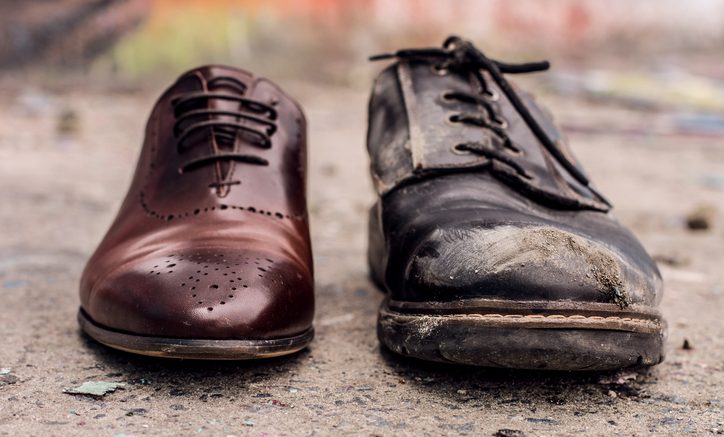
7 Major Differences Between Rich People and Poor People
富人窮人之差別
Major Differences Between Rich People and Poor People - Manifestation Miracle
 By: Mark Williams

Here are the 7 biggest reasons why rich people and poor people stay the way they are:

#1: Rich people know their HOWs and WHYs, poor people are wishy-washy about getting wealthy

This is one of the biggest problems I see with a lot of folks.

They always talk about wanting to raise their income and improve their lives…

…but it’s just empty words and not a lot of follow through.

Intention is good, but taking action makes the REAL difference.

And a lot of people end up getting stuck in the “wanting” stage because they don’t have a crystal clear idea of two important things:

– WHY they want to get rich
– HOW they’re going to get rich
Having a sense of direction and purpose are crucial to making anything happen.

Without it, you’ll be stumbling aimlessly through life, then complain about the negative balance in your bank account.

Here’s a quick assignment you can do: make a mission-vision statement.

Do a little reflection and think about where you want to go in life. Consider the principles and values you live by, and how they fit into your overall plans.

Visualize the future you want, then get as detailed as you can about it.

Maybe you’re dreaming about being a world-class chef running a Michelin-starred restaurant. Or you see yourself putting up an animal shelter for abused and abandoned pets.

Think about what a typical day in that life would be like.

Imagine the kind of value you’d be adding to people’s lives, and the kind of positive impact you’d make in your community.

Then ask yourself, “What role does WEALTH play in realizing my big goals in life?”

Once you’ve got your compass pointing to your “True North”, you’ll have a much clearer set of goals to shoot for – and get excited about making money.

And best part is that it’ll be easier to break down those goals into smaller, more actionable steps.

That will make your wealth-building mission a lot less intimidating. This is definitely a good thing – fear is what stops most people from fully committing to their goals.

#2: Rich people love challenges, poor people run for the hills

I’m not judging anyone for avoiding their problems, but it certainly won’t help them get rich.

Procrastination, denial and blame are the top three symptoms among people who stay poor all their lives.

They put off working on a solution to their problems…

…deny the problem exists in the first place…

…and to top it off, they take zero responsibility, blaming everyone and everything.

Meanwhile, wealth-minded folks eat adversity for breakfast and dive headfirst into the uncomfortable.

They know it’s not always a pleasant thing to do, but they embrace it anyway.

Rich people treat challenges as a test of character. They get to work by figuring out how to improve themselves, or find out what they’re doing wrong.

In most cases, it’s a little bit of having to do both.

And after they get over a particularly pesky hurdle, they’re all the wiser and stronger for it.

#3: Rich people INVEST, poor people SPEND

Every payday, it’s the same cycle for poor folks.

Once the money comes in, they go out and buy the latest gadget they’ve had their eye on for the last couple of months.

After scratching that itch, they get around to paying the bills and other necessities.

Then they spend whatever they’ve got left on other stuff that doesn’t bring any value or help them make more money.

Lather, rinse, repeat.


If you want to be rich – and STAY that way – you need to get your priorities straight.
「good habits improve your life」的圖片搜尋結果
好習慣增進生活品質
Habits for Improving the Quality of Your Life
Alex Noudelman  carmelvision

Are you finding yourself feeling frustrated day in and day out? Do you feel like a zombie, waking up each day to the same mundane things that seem never-ending? Has the quality of your life decreased every year, resulting in a loss of energy, vitality, and enthusiasm? Here are 7 habits to adopt in order to improve your quality of life in 1 year from now.
1. Read a book every month

Even if you’re relatively new to and not particularly fond of reading, you will learn a lot. Some books will disappoint you with their mediocrity, some will make you happy with a good plot and some more will have you running to the dictionary every few pages; all of them will teach you something new.
2. Think carefully before making a judgement

I used to be very judgmental. However, over the past year I closely thought about how unfair I have been in the past and all the things I have done because of this. Before you make a comment about someone and their actions, put yourself in their shoes and think about why they do the things they do. You’ll see them in a different light. And even if you don’t, at least you’ll puzzle over instead of making a snap judgement.
3. Reduce smartphone usage

If you have one, that is. If you don’t, more power to you. I cannot tell you how many times I go out with people and they stick to their smartphones. Some are Whatsapp-ing, while others are checking office e-mails and taking pictures. They’re so busy interacting with people online, they pay little attention to people around them.
4. Smile and talk

Greet everybody you know. Also, try to smile while you talk to people. This makes you appear approachable, and amiable.
5. Exude Positivity

Try being honest with yourself and others, refrain from gossip and be willing to forgive people who make mistakes because no one is perfect. As well, stop hanging around with negative people and spend more time with happy, productive, and smiling individuals.
6. Choose a hobby you like

It could be anything…biking, writing, exercising etc. Or go back to one you left. And keep a record of your work. As you change, your work will also change to reflect you. I like writing and I have a blog. Once in a while, I read my older entries and don’t even recognize the person who wrote them. It teaches you a lot about your