陽光甜味咖啡館 Sun Sweet Cafe

We meet right here every Tuesday, Friday and Saturday evening.

Dare to dream!

勇敢夢!

LOVE YOURSELF!

愛自己!

周四 (6/21)1.反轉 糟糕的一天 2.沉迷電玩 列為精神病

板橋站區文化路一段421巷11弄1號 (陽光甜味咖啡館)
埔捷運1號出口 旁邊7-11巷子進入20公尺 看到夏朵美髮左轉    PM 7:00-9:30
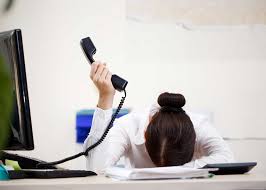
「Bad Day at Work」的圖片搜尋結果
反轉 糟糕的一天
5 Ways to Bounce Back From a Bad Day at Work    huffingtonpost

1. Don’t Take It Personally
Bad days at work can be caused by a number of things — but if your bad day was set off by someone else’s negativity, don’t take it personally. If someone else was angry, upset, stressed. frustrated, or just plain mean, it’s important that you not internalize their actions or behavior. Don’t bottle up how a bad day made you feel. Communicating how you feel to someone else can help you work through how you’re feeling, and it may also help to get feedback and perspective from an outsider.
Coach Christine Kane has a great set of tips you can use to stop taking things personally.

2. Shake It Off and Don’t Take It Home
When work sucks, it’s all too easy to bring our stress and unhappiness home with us. To shake off a bad day, leave work at work. Try to establish an end-of-the-workday routine that helps signal the official end of the day. That way, when things don’t go so great, your mind still gets to process that work is over — and now it’s time to go home, relax, and do something that makes you happy.
Speaking of, another way you can bounce back is to....

3. Do Something That Makes You Feel Great!
Put an end to your bad day by seeking out things you know make you feel empowered, confident, and happy. That might mean doing a yoga routine when you get home. Maybe you can grab your favorite book and a glass of red wine and treat yourself to a quiet evening in. Or if you’re extroverted, you may get your energy back by taking someone on a coffee date.
Just make sure you engage in healthy habits. You won’t bounce back from a bad day if you overindulge in food or alcohol, and having an hours-long TV binge likely won’t make you feel better. You need to bring yourself back up — not sedate yourself with activities that keep you sedentary and disengaged.

4. Vent or Rant if You Need To
And of course, sometimes you just need to vent and rant. That’s okay! Get it all out, but put a time limit on the complaint session. Moan and whine for 10 minutes. Then be done, move on, and do something that makes you happy.

5. Evaluate What Happened
Hopefully, one or more of these strategies can help you bounce back after a bad day at work. But before you move on and put everything behind you, take a moment to reflect on what didn’t go so great. If you can evaluate what went wrong, you can better understand how to avoid doing the same thing in the future.
This will help you be proactive, rather than reactive — and you may be able to prevent a bad day from derailing your week before it even happens.
  「WHO recognizes gaming addiction as a mental health condition」的圖片搜尋結果
沉迷電玩 列為精神病
Gaming addiction classified as disorder by WHO          BBC

Gaming addiction is to be listed as a mental health condition for the first time by the World Health Organization.

Its 11th International Classification of Diseases (ICD) will include the condition "gaming disorder".

The draft document describes it as a pattern of persistent or recurrent gaming behaviour so severe that it takes "precedence over other life interests".

Some countries had already identified it as a major public health issue.

Many, including the UK, have private addiction clinics to "treat" the condition.

The last version of the ICD was completed in 1992, with the new guide due to be published in 2018.

The guide contains codes for diseases, signs and symptoms and is used by doctors and researchers to track and diagnose disease.

It will suggest that abnormal gaming behaviour should be in evidence over a period of at least 12 months "for a diagnosis to be assigned" but added that period might be shortened "if symptoms are severe".

Dr Richard Graham, lead technology addiction specialist at the Nightingale Hospital in London, welcomed the decision to recognise the condition.

"It is significant because it creates the opportunity for more specialised services. It puts it on the map as something to take seriously."

But he added that he would have sympathy for those who do not think the condition should be medicalised.

"It could lead to confused parents whose children are just enthusiastic gamers."

He said he sees about 50 new cases of digital addiction each year and his criteria is based on whether the activity is affecting basic things such as sleep, eating, socialising and education.

He said one question he asked himself was: "Is the addiction taking up neurological real-estate, dominating thinking and preoccupation?"

Many psychiatrists refer to the Diagnostic and Statistical Manual of Mental Disorders (DSM), the fifth edition of which was published in 2013.

Lots of countries are grappling with the issue and in South Korea the government has introduced a law banning access for children under 16 from online games between midnight and 06:00.

In Japan, players are alerted if they spend more than a certain amount of time each month playing games and in China, internet giant Tencent has limited the hours that children can play its most popular games.


週二(6/19)1.吸管禁令&珍珠奶茶2.世足吉祥物 3.屈原為何自殺?

板橋區文化路一段421巷11弄1號 (陽光甜味咖啡館)
埔捷運站1號出口 旁邊7-11巷子進入20公尺 看到夏朵美髮左轉    PM 7:00-9:30

「吸管禁令」的圖片搜尋結果
吸管禁令&珍珠奶茶
Straw dilemma grips the nation      taipeitimes

Since the Environmental Protection Administration (EPA) launched draft guidelines for a ban on single-use plastic straws earlier this month, the question on how to drink a cup of bubble tea without a plastic straw has perturbed many Taiwanese, including President Tsai Ing-wen (蔡英文) and other politicians.

Following the expansion of its regulations for plastic bags in January, the agency on June 8 announced that, starting in July next year, restaurants at government agencies, public and private schools, public hospitals, department stores and shopping malls, as well as fast food chains, would be banned from providing single-use plastic straws to customers dining in.

On Sunday last week, in response to media queries on about how people could drink a cup of bubble tea without a plastic straw, Department of Waste Management specialist Lee Yi-hua (李宜樺) said that people could use a spoon instead, sparking a debate that has continued to escalate.

I-Mei Foods Co general manager Kao Chih-ming (高志明) on Monday said that although the agency’s restrictions on plastic products follow with the global trend, it should consider “opening a window” for bubble tea, which is the nation’s signature drink, as its flavor would be changed if it is eaten with a spoon instead of a straw.

Public debate about the policy heated up to such a level that even Tsai, when presiding over a party meeting on Wednesday in her capacity as Democratic Progressive Party chairperson, asked what people should use when having bubble tea, if not plastic straws.

The proposed ban is part of the EPA’s broader strategy to ban single-use plastic shopping bags, tableware, takeout beverage cups and straws by 2030, EPA Deputy Minister Chan Shun-kuei (詹順貴) said, adding that it was launched in February and met little opposition at the time.

The plastic straws for takeout bubble tea are not included in the draft guidelines, he said, adding that the EPA would only begin to ask businesses to stop providing free plastic straws for takeout customers in 2025.

「世足 吉祥物」的圖片搜尋結果
世足 吉祥物
World Cup Mascots - When Was The First World Cup Mascot?  worldsoccer.com

The first mascot was World Cup Willie in 1966, take a look at the rest of the World Cup mascots for each tournament.

World Cup Mascots

The idea of having a tournament mascot is common place in every single sporting event nowadays. But in the FIFA World Cup this was not always the case. The first one was in 1966, so take a look at the mascots for each respective World Cup since then.

2006 – Germany – Goleo VI (sidekick – Pille)

Probably designed at a younger audience, the 2006 mascot included Goleo, the lion, and a talking football called Pille. It did draw criticism too with people calling for a more suitable animal to be chosen to represent Germany, and for him to be wearing trousers.

2010 – South Africa – Zakumi

The animal trend would continue for South Africa in 2010 with the leopard Zakumi. Coloured in yellow and green to signify the South African colours, his name comes from ‘ZA’ which means South Africa, and ‘Kumi’ which is ten in several African languages.

2014 – Brazil – Fuleco

Six Brazilian agencies were tasked with coming up with signs for the 2014 mascot, and Fuleco the armadillo won. Interestingly, Brazil sought to acknowledge environmental issues in this design. This is illustrated by the fact he is a three-banded armadillo, which is vulnerable, and his name Fuleco fuses the word football and ecology in Portuguese.

2018 – Russia – Zabivaka

The 2018 tournament’s mascot is Zabivaka which translates to ‘the one who scores’ in Russian. His name was selected by over 1 million voting Russians, and he was revealed on live television.
「Chiuyuan jumped into a river to commit suicide.」的圖片搜尋結果
屈原為何自殺?
The Sad story of Qu Yuan

In China, the Dragon Boat Festival memorializes the Chinese patriotic poet Chiu Yuan(340 BC-278 BC or 343-290 B.C.), who committed suicide by jumping into the river after tying himself with big rock on the 5th day of the 5th lunar month.

Chiu Yuan was the number one advisor of the kingdom of Chu. But people were jealous his position and said lots of bad words on his back. The king wouldn't take his advice in the end and was killed by the enemy of neighbor kingdom. The new king continued to enjoy the luxury life and didn't like Chiu Yuan either. Later, Chiu Yuan was exiled. He wrote many patriotic poem after then.


周六(6/16)1.瞎拚 活較久! 2. 靈媒 借屍還魂 下午4:00-6:00

板橋區文化路一段421巷11弄1號 (陽光甜味咖啡館)
新埔捷運站1號出口 旁邊7-11巷子進入20公尺 看到夏朵美髮
左轉       聚會時間 下午4:00--6:00
「shopping」的圖片搜尋結果
瞎拚 活較久!
The secret to a long life? Just pop to the shops (and that goes for men too)

By Jenny Hope for the Daily Mail

A study of almost 1,850 people aged 65 and over living independently at home found those who shopped daily lived longer than those who shopped less frequently

A study of almost 1,850 people aged 65 and over living independently at home found those who shopped daily lived longer than those who shopped less frequently

It may come as old news to many women, but it seems a bit of retail therapy really is good for you.

A day at the shops can help you live longer, says a study.

And surprisingly, the benefits are actually greater for men.

The study even suggests the long-term survival benefits of shopping are better than going to the gym.

Seeing friends and just people-watching can stave off loneliness and improve psychological health, suggests research published online in the Journal of Epidemiology and Community Health.

It looked at almost 1,850 people aged 65 and over living independently at home in Taiwan, who were asked how often they went shopping.

The researchers then tracked how long each of the participants lived by linking individuals to national death registration data between 1999 and 2008.

They found those who shopped daily lived longer than those who shopped less frequently, even after taking account of people’s physical or other health problems.

Going to the shops every day cut the chances of a participant dying during the period of the study by more than a quarter compared with those who don’t shop regularly.

Older men who frequently popped out to the shops had the best survival record, with a reduction of 28 per cent in their chances of dying, while older women saw slightly less benefit with a 23 per cent cut in dying.
 
 靈媒 借屍還魂
Funeral of Taiwanese psychic ‘Tsai Gu’ draws her legendary resurrection story to a close
Taiwan News

TAIPEI (Taiwan News) – A legendary and mysterious Taiwanese grandmother's 60-year resurrection journey came to an end with a grand funeral on Monday, which was attended by several legislators. The family received messages of condolence from county chiefs and heads of the government.

The grandmother, known by the name of the spirit that possessed her body, Chu Hsiu-hua (朱秀華) and given the nickname "Tsai Gu" (菜姑) by her followers, was honored for her life's work of humbly giving assistance to people who sought spiritual help.

She rigorously observing a vegan diet after she was reportedly brought back from the underworld to the world of the living via the body of a 37-year-old woman living in Yunlin, Taiwan, in 1958, according to local media reports.

Passing away of a Taiwanese woman regains attention for her legend

Chu passed away on May 23, 2018, and her death made headlines for several weeks throughout the country for the extraordinary legend surrounding her life, which began over 60 years ago. On Monday morning, her family held a funeral for Chu, and that drew a large crowd of followers and politicians.

People were remembering Tsai Gu, not only for her numerous kind acts, but also for the legend surrounding her resurrection, which has been widely covered by media agencies and studied by ethnologists. Her story was even adapted into a few Taiwanese movies and TV dramas.

Questions concerning her mental health and her purported supernatural abilities have never ceased, so she chose to stay low key throughout her life, and devoted herself entirely to volunteering at a temple as a psychic, teaching people to do no evil. Over the past 60 years, she rarely accepted media interviews, while supposedly living in the body of her older host.

The funeral on Monday morning marked the end of 60 years of Chu's resurrection journey and marked the final chapter of her legend. The funeral drew two legislators representing the same district, including Su Chih-fen and Chang Li-shan. The family received messages of condolence from the magistrates of Yunlin, Changhua, and Hsinchu as well as a message from Premier William Lai.


周四 (6/21)1.反轉 糟糕的一天 2.沉迷電玩 列為精神病

板橋站區文化路一段421巷11弄1號 (陽光甜味咖啡館)
埔捷運1號出口 旁邊7-11巷子進入20公尺 看到夏朵美髮左轉    PM 7:00-9:30
「Bad Day at Work」的圖片搜尋結果
反轉 糟糕的一天
5 Ways to Bounce Back From a Bad Day at Work    huffingtonpost

1. Don’t Take It Personally
Bad days at work can be caused by a number of things — but if your bad day was set off by someone else’s negativity, don’t take it personally. If someone else was angry, upset, stressed. frustrated, or just plain mean, it’s important that you not internalize their actions or behavior. Don’t bottle up how a bad day made you feel. Communicating how you feel to someone else can help you work through how you’re feeling, and it may also help to get feedback and perspective from an outsider.
Coach Christine Kane has a great set of tips you can use to stop taking things personally.

2. Shake It Off and Don’t Take It Home
When work sucks, it’s all too easy to bring our stress and unhappiness home with us. To shake off a bad day, leave work at work. Try to establish an end-of-the-workday routine that helps signal the official end of the day. That way, when things don’t go so great, your mind still gets to process that work is over — and now it’s time to go home, relax, and do something that makes you happy.
Speaking of, another way you can bounce back is to....

3. Do Something That Makes You Feel Great!
Put an end to your bad day by seeking out things you know make you feel empowered, confident, and happy. That might mean doing a yoga routine when you get home. Maybe you can grab your favorite book and a glass of red wine and treat yourself to a quiet evening in. Or if you’re extroverted, you may get your energy back by taking someone on a coffee date.
Just make sure you engage in healthy habits. You won’t bounce back from a bad day if you overindulge in food or alcohol, and having an hours-long TV binge likely won’t make you feel better. You need to bring yourself back up — not sedate yourself with activities that keep you sedentary and disengaged.

4. Vent or Rant if You Need To
And of course, sometimes you just need to vent and rant. That’s okay! Get it all out, but put a time limit on the complaint session. Moan and whine for 10 minutes. Then be done, move on, and do something that makes you happy.

5. Evaluate What Happened
Hopefully, one or more of these strategies can help you bounce back after a bad day at work. But before you move on and put everything behind you, take a moment to reflect on what didn’t go so great. If you can evaluate what went wrong, you can better understand how to avoid doing the same thing in the future.
This will help you be proactive, rather than reactive — and you may be able to prevent a bad day from derailing your week before it even happens.
  「WHO recognizes gaming addiction as a mental health condition」的圖片搜尋結果
沉迷電玩 列為精神病
Gaming addiction classified as disorder by WHO          BBC

Gaming addiction is to be listed as a mental health condition for the first time by the World Health Organization.

Its 11th International Classification of Diseases (ICD) will include the condition "gaming disorder".

The draft document describes it as a pattern of persistent or recurrent gaming behaviour so severe that it takes "precedence over other life interests".

Some countries had already identified it as a major public health issue.

Many, including the UK, have private addiction clinics to "treat" the condition.

The last version of the ICD was completed in 1992, with the new guide due to be published in 2018.

The guide contains codes for diseases, signs and symptoms and is used by doctors and researchers to track and diagnose disease.

It will suggest that abnormal gaming behaviour should be in evidence over a period of at least 12 months "for a diagnosis to be assigned" but added that period might be shortened "if symptoms are severe".

Dr Richard Graham, lead technology addiction specialist at the Nightingale Hospital in London, welcomed the decision to recognise the condition.

"It is significant because it creates the opportunity for more specialised services. It puts it on the map as something to take seriously."

But he added that he would have sympathy for those who do not think the condition should be medicalised.

"It could lead to confused parents whose children are just enthusiastic gamers."

He said he sees about 50 new cases of digital addiction each year and his criteria is based on whether the activity is affecting basic things such as sleep, eating, socialising and education.

He said one question he asked himself was: "Is the addiction taking up neurological real-estate, dominating thinking and preoccupation?"

Many psychiatrists refer to the Diagnostic and Statistical Manual of Mental Disorders (DSM), the fifth edition of which was published in 2013.

Lots of countries are grappling with the issue and in South Korea the government has introduced a law banning access for children under 16 from online games between midnight and 06:00.

In Japan, players are alerted if they spend more than a certain amount of time each month playing games and in China, internet giant Tencent has limited the hours that children can play its most popular games.