陽光甜味咖啡館 Sun Sweet Cafe

We meet right here every Tuesday, Friday and Saturday evening.

Dare to dream!

勇敢夢!

LOVE YOURSELF!

愛自己!

周五(12/20)1.尋找 懂你的人嗎? 2.租一個阿嬤? / 或孫子

聚會時間 晚上7:00-9:30
板橋區文化路一段421巷11弄1號 (陽光甜味咖啡館)
新埔捷運站1號出口 旁邊7-11巷子進入20公尺 看到夏朵美髮左轉
「look for someone who understand you」的圖片搜尋結果
尋找 懂你的人嗎?
Stop Looking For 'The One,' Start Looking For Someone Who Understands You
elitedaily.com

Searching is active and it takes a lot of time -- you have more important things to focus on.

I understand that finding someone you love is difficult, and because it’s difficult, you feel the need to dedicate time to finding that special someone. However, actively searching -- dedicating significant time to meeting new people for the hopes of finding the love of your life -- is pretty much futile.

This is not to say you should avoid meeting new people and giving yourselves a chance to get to know each other, but you shouldn’t make that the focus of your life.

There are surely other things you could be doing and working on. We all love the idea of dedicating our lives to one incredible individual, but you can’t dedicate your life to the search itself. You’re betting your happiness on an uncertainty and wasting valuable time.
If you do find the right one, you likely won’t be ready for it -- and that’s the worst thing that could ever happen to you.

I remember being younger and dreaming about meeting the perfect girl -- I was always a romantic. I knew I’d find the love of my life. What I didn’t realize is that I wouldn’t be ready to love her the way she deserved to be loved.

It’s almost like a bad joke; we spend so much time trying to find someone to love and when we do, half the time we aren’t yet capable of dedicating ourselves in the way necessary.

Finding the right one too soon will break your heart. It will change the way you understand love and the way you look at the world.

Finding the love of your life before you’re mature enough to handle such a relationship will likely be the best and worst thing that ever happens to you.

You’ll lose the love of your life, but you’ll come out much stronger and wiser for it.
We live in a world in which nobody seems to truly understand anybody.

Why not explore how well you can actually get to know someone? People seem to think that getting to know someone is easy -- you just spend time with that person and you automatically learn all you need to know. Unfortunately, it’s not that easy; you need to understand what it is you’re looking for.

Most of the relationships we have in our lives -- not just romantic relationships, but relationships of all kinds -- are shallow. We rarely get to know someone on the deepest of levels.

A lot of the time I believe it’s because some people just don’t click -- they don’t trust each other enough to open up to the other. But most of the time, I feel it’s because most people don’t care enough to ask the right questions.

Most of us just aren’t curious enough about other people. Hell, most conversations consist of one person talking and the other simply waiting to respond. Rarely do people bother to listen.
Whenever you actively look for something, how often do you actually end up finding it?

It’s when we don’t bother searching that things seem to fall into our laps. We’ve all experienced this phenomenon before. We spend hours searching for our passports, our keys, a specific document we managed to misplace.

We search and search and search until we run out of time. Then, the next day, we happen to stumble on whatever it is that we were searching for with no effort at all.

When you’re searching for something, or someone, you are going about with a set of already established pretenses or beliefs. You think you know the type of person you are looking for.

You think you know where you are most likely to find him or her. You think you have it all figured out, but then life surprises you. You meet someone more incredible than you could have ever imagined and you end up meeting him or her in the most unlikely fashion. Welcome to life.
Have you ever stopped to think about whether or not you’re the right person for the person you believe is the right person for you?

You may one day be, but are you that right person right now? It’s one thing not to be mature enough to nurture a loving relationship, and it’s another not to be the person the love of your life needs or deserves.
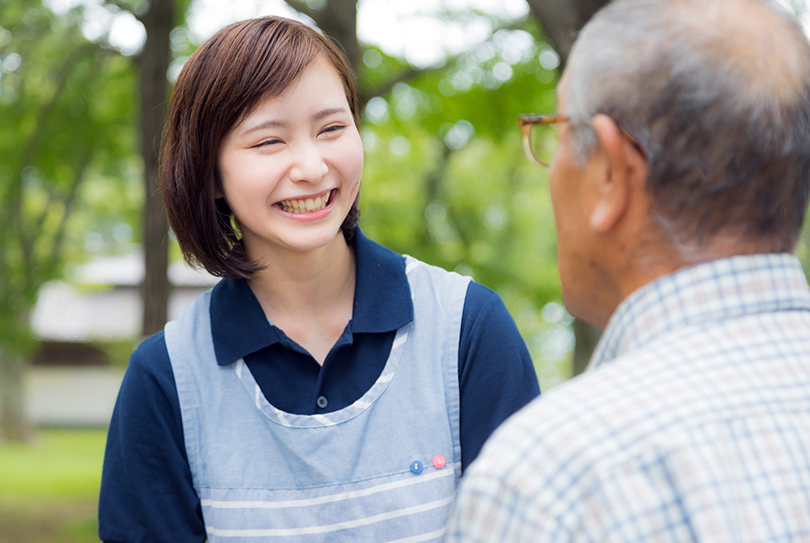
 「kindness grandma」的圖片搜尋結果
租一個阿嬤? / 或孫子?
Rent-a-Grandma - Business Owl | Business Ideas
Business Owl

Tired of hiring unreliable teenage babysitters? Rent-a-Grandma is a business idea which will appeal to you. Former Los Angeles teacher Todd Pliss came up with this novel business idea after hearing about the difficulties the parents of his students had with finding good help. Rent-a-Grandma is a runaway success, with franchises opening thick and fast across the United States.

What is Rent-a-Grandma?

Rent-a-Grandma describes itself as a one-stop shop for all your domestic staffing needs. Rent-a-Grandma provides nannies, household maintenance staff, large estate maintenance staff and specialised services such as chefs, personal assistants, elderly care and pet care.

Rent-a-Grandma’s trusted domestic helpers are carefully screened, mature women who take their chores seriously – no tweeting while they’re supposed to be watching the kids.

How does Rent-a-Grandma work?

Go to the Rent-a-Grandma website, create a profile and click ‘Find a Grandma’. Then, enter your postal code and the type of help you require and browse the list of grandmas in your area. Find a nanny you like and contact them directly.

Rent-a-Grandpa       washingtonpost

Rent-a-Grandma is expanding its winning business idea to include Rent-a-Grandpa– a service connecting clients looking for handy work with grandpas.

These college students moonlight as ‘grandkids’ for hire. Seniors love it.

When Andrew Parker’s grandfather began suffering from dementia three years ago, his grandmother had to start taking care of the house and caring for him. It was hard work, and one day, Parker got the idea to hire a college student to help out. “I said, ‘Hey, can you go hang out with my grandfather and make him a sandwich or something? I’ll pay you, lets see how it goes.”

His grandfather loved it. And more importantly, so did his grandmother. For a few hours, he said, “She got to go do her own thing.”

It got Parker thinking. “There’s so many seniors and so many college students out there.” So in January, the 30-year-old Miami, FL resident launched a business called Papa, after his name for his grandfather. It connects students with seniors for light housekeeping or driving chores, but the company’s real goal is in its slogan: “Grandkids on-Demand.”


周六(12/14)1.年度風雲人物 2.日本拉麵

星期六 聚會時間 晚上7:00-9:30
板橋區文化路一段421巷11弄1號 (陽光甜味咖啡館)
新埔捷運站1號出口 旁邊7-11巷子進入20公尺 看到夏朵美髮左轉
「time’s person of the year 2019」的圖片搜尋結果
年度風雲人物
Time’s Person of the Year is Greta Thunberg
By Hannah Knowles

At 16 years old, Greta Thunberg has mobilized people around the world with calls to confront climate change and condemnations of leaders’ inaction.

“How dare you,” the Swedish teenager told an assembly of the powerful at a United Nations gathering this fall, after telling them she should be “back in school on the other side of the ocean. Yet you have come to us young people for hope.”

She’s rejected accolades for her activism, saying awards are not what her environmental movement needs. But on Wednesday, the teen who has vowed “change is coming” picked up another acknowledgment of her work’s impact: She is Time magazine’s Person of the Year, its youngest ever.

“She became the biggest voice on the biggest issue facing the planet this year, coming from essentially nowhere to lead a worldwide movement,” Time editor in chief Edward Felsenthal said as he announced the pick on NBC’s “Today” show Wednesday morning.

Thunberg represents a broader trend of young people pushing for change, Felsenthal said, pointing to another finalist for this year’s distinction, the Hong Kong protesters who have spent months in the streets calling for democratic reform.

Pelosi has been at the forefront of the Democrat-led inquiry, saying lawmakers have “no choice but to act” amid evidence Trump abused his office to pressure a foreign leader to undermine a political rival, former vice president Joe Biden. Trump and his supporters accuse their opponents of working to overturn the 2016 election and distracting from other issues that Americans care about.

Trump has repeatedly attacked Pelosi and other Democratic leaders over the impeachment inquiry. He has also railed against the whistleblower.

Last year, Time’s Person of the Year was “the Guardians” of the truth, four individuals and one group — all journalists — who helped expose “the manipulation and the abuse of truth” around the world. Among them: Jamal Khashoggi, a Washington Post contributing columnist who was killed inside Saudi Arabia’s consulate in Istanbul.

“The Guardians” also included the staff of the Capital Gazette, whose Maryland newsroom was attacked by a gunman; Maria Ressa, chief executive of the Rappler news website who has been made a legal target for the outlet’s coverage of Philippine President Rodrigo Duterte; and journalists Wa Lone and Kyaw Soe Oo, who have been jailed in Myanmar for nearly a year for their work exposing the mass killings of Rohingya Muslims.

Time has chosen a “Person of the Year” since 1927, though the distinction originally was called “Man of the Year.”
Soy ramen.jpg
日本拉麵
Japanese Ramen
Ramen (/ˈrɑːmən/) (拉麺, ラーメン rāmen, IPA: [ɾaꜜːmeɴ]) is a Japanese dish with a translation of "pulled noodles". It consists of Chinese wheat noodles served in a meat or (occasionally) fish-based broth, often flavored with soy sauce or miso, and uses toppings such as sliced pork (叉焼 chāshū), nori (dried seaweed), menma, and scallions. Nearly every region in Japan has its own variation of ramen, such as the tonkotsu (pork bone broth) ramen of Kyushu and the miso ramen of Hokkaido. Mazemen is the name of a Ramen dish that is not served in a soup, but rather with a sauce (such as tare), rather like noodles that is served with a sweet and sour sauce.

Origin

Ramen is a Japanese[2] adaptation of Chinese wheat noodles.[3][4][5][6][7] One theory says that ramen was first introduced to Japan during the 1660s by the Chinese neo-Confucian scholar Zhu Shunsui who served as an advisor to Tokugawa Mitsukuni after he became a refugee in Japan to escape Manchu rule and Mitsukuni became the first Japanese person to eat ramen, although most historians reject this theory as a myth created by the Japanese to embellish the origins of ramen.[8] The more plausible theory is that ramen was introduced by Chinese immigrants in the late 19th[9][3] or early 20th century at Yokohama Chinatown.[10][11] According to the record of the Yokohama Ramen Museum, ramen originated in China and made its way over to Japan in 1859.[9] Early versions were wheat noodles in broth topped with Chinese-style roast pork.

Etymology

The word ramen is a Japanese transcription of the Chinese lamian (拉麵).[12][13] In 1910, the first ramen shop named RAIRAIKEN(ja:来々軒) opened at Asakusa, Tokyo, where the Japanese owner employed 12 Cantonese cooks from Yokohama's Chinatown and served the ramen arranged for Japanese customers.[14][15] Until the 1950s, ramen was called shina soba (支那そば, literally "Chinese soba") but today chūka soba (中華そば, also meaning "Chinese soba") or just ramen (ラーメン) are more common, as the word "支那" (shina, meaning "China") has acquired a pejorative connotation.[16]

Initial appearance

By 1900, restaurants serving Chinese cuisine from Canton and Shanghai offered a simple dish of noodles (cut rather than hand-pulled), a few toppings, and a broth flavored with salt and pork bones. Many Chinese living in Japan also pulled portable food stalls, selling ramen and gyōza dumplings to workers. By the mid-1900s, these stalls used a type of a musical horn called a charumera (チャルメラ, from the Portuguese charamela) to advertise their presence, a practice some vendors still retain via a loudspeaker and a looped recording. By the early Shōwa period, ramen had become a popular dish when eating out.


周五(12/13)1.一起聚餐 快樂多!

本周五 (12/13)  PM 6:30 -10:00有個 potluck 餐會 歡迎您來聚餐
(參加者 請帶一道食物 來分享)
文章討論一篇 仍然進行
12年了 感恩 還有些不離棄的朋友 熱情相挺
這個學習平台 仍然存在 希望您 仍繼續支持 謝謝
「benefits of eating together with friends happier」的圖片搜尋結果
一起聚餐 快樂多!
Stay Happy and Healthy by Eating with Friends        greatist

Life can be crazy, which means meals on the go are the norm for many. But preserving the endangered ritual of a regular communal meal can lead to a healthier and happier state, even post meal timeThe Association between Family Meals, TV Viewing during Meals, and Fruit, Vegetables, Soda, and Chips Intake among Latino Children. Andaya AA., Arredondo EM., Alcaraz JE. et al. National Institutes of Health. Journal of Nutrition Education and Behavior, 2010 Oct 20Trusted SourceDon’t hide your happiness! Positive emotion dissociation, social connectedness, and psychological functioning. Mauss, IB., Shallcross, AJ., Troy, AS., et al. University of Denver, Denver. Journal of Personality and Social Psychology, 2011 Apr;100(4):738-48Trusted Source.
Say No To Meals On The Go — The Need-to-Know

Social connectedness, whether hanging out after work or sitting down at the table with friends and family for a nightly meal, has been shown to increase happiness and help alleviate depression Don’t hide your happiness! Positive emotion dissociation, social connectedness, and psychological functioning. Mauss,IB., Shallcross, AJ., Troy, AS., et al. University of Denver, Denver. Journal of Personality and Social Psychology, 2011 Apr;100(4):738-48Trusted Source. Unless meal time looks something like this, the simple act of gathering around the table helps establish connections, which studies have found are crucial in maintaining happiness and a sense of belongingPsychological resilience and positive emotional granularity: examining the benefits of positive emotions on coping and health. Tugade, MM., Fredrickson, BL., Barrett, LF. Department of Psychology, Vassar College, Poughkeepsie, NY. Journal of Personality, 2004 Dec;72(6):1161-90Trusted Source. Translation: Text messages won’t cut it.

Enjoying dinner with friends or family brings a one-two punch of benefits: it accomplishes the goal of face-to-face interaction and can also lead to healthier eating choicesThe Association between Family Meals, TV Viewing during Meals, and Fruit, Vegetables, Soda, and Chips Intake among Latino Children. Andaya, A.A., Arredondo, E.M., Alcaraz, J.E., et al. National Institutes of Health. Journal of Nutrition Education and Behavior, 2010 Oct 20Trusted Source. One study found that children who ate family dinners as opposed to quick grab-and-go meals ate more fruits and vegetables and drank less sodaThe Association between Family Meals, TV Viewing during Meals, and Fruit, Vegetables, Soda, and Chips Intake among Latino Children. Andaya, A.A., Arredond, E.M., Alcaraz, J.E., et al. National Institutes of Health. Journal of Nutrition Education and Behavior, 2010 Oct 20Trusted Source. But this isn’t always the case; do beware of the social overeating trap.
Grab Some Grub, Communally — Your Action Plan

Reaping the benefits of communal eating is pretty simple: Just gather some people together around food, sit down together, talk, eat, and enjoy! Here are some tips for planning a meal with friends and family:

    Plan a potluck. Meals with friends are way more appealing when one person doesn’t have to do all the work — just make sure to find out what dishes people are bringing ahead of time so there aren’t nine desserts and one spinach salad when it’s time to eat. (Because having nine desserts to choose from sounds like a terrible fate… sort of.)
    Choose killer recipes. One of the best parts about eating with friends — aside from the good company — is, well, eating. Make sure the food is delicious by trying some of Greatist’s tried and true recipes.
    Set a date. Commitments are way harder to break when they’re scheduled in advance. Work with the group to establish a meeting time that works for everybody the majority of the time — say, every Tuesday evening — and stick to it.

    Make a reservation. Find out that all your friends are less than gifted in the kitchen? No problem. Going out for a meal with friends or family allows you to reap all the benefits of communal eating without any of the post-meal clean up (and the associated stress). Just be sure to pick a healthy spot, and don’t let the social setting derail your diet.

周六(12/7)1.最佳睡姿? 2.如何成為 人生勝利組?

星期六 聚會時間 晚上7:00-9:30
板橋區文化路一段421巷11弄1號 (陽光甜味咖啡館)
新埔捷運站1號出口 旁邊7-11巷子進入20公尺 看到夏朵美髮左轉
「is good sleep on your stomach」的圖片搜尋結果
最佳睡姿?
The Best Sleep Position for Your Body

Your sleeping pose can have a major impact on your slumber—as well as your overall health. Poor p.m. posture could potentially cause back and neck pain, fatigue, sleep apnea, muscle cramping, impaired circulation, headaches, heartburn, tummy troubles, and even premature wrinkles.
Wondering which sleep spot is best? Check out the rankings, below, from best to worst.
1. On Your Back

Though it’s not the most popular position—only eight percent of people sleep on their backs—it’s still the best. By far the healthiest option for most people, sleeping on your back allows your head, neck, and spine to rest in a neutral position. This means that there’s no extra pressure on those areas, so you're less likely to experience pain. Sleeping facing the ceiling also ideal for warding off acid reflux. Just be sure to use a pillow that elevates and supports your head enough—you want your stomach to be below your esophagus to prevent food or acid from coming up your digestive tract. However, snoozing on your back can cause the tongue to block the breathing tube, making it a dangerous position for those who suffer from sleep apnea (a condition that causes periods of breathlessness). This position can also make snoring more severe.
2. On Your Side

This position (where your torso and legs are relatively straight) also helps decrease acid reflux, and since your spine is elongated, it wards off back and neck pain. Plus, you're less likely to snore in this snooze posture, because it keeps airways open. For that reason, it’s also the best choice for those with sleep apnea. Fifteen percent of adult choose to sleep on their side, but there’s one downside: It can lead to wrinkles, because half of your face pushes against a pillow.
3. In the Fetal Position

With 41 percent of adults choosing this option, it’s the most popular sleep position. A loose, fetal position (where you're on your side and your torso is hunched and your knees are bent)—especially on your left side—is great if you're pregnant. That's because it improves circulation in your body and in the fetus, and it prevents your uterus from pressing against your liver, which is on your right side. This pose is also good for snorers. But resting in a fetal position that's curled up too tightly can restrict breathing in your diaphragm. And it can leave you feeling a bit sore in the morning, particularly if you have arthritis in your joints or back. Prevent these woes by straightening out your body as much as you can, instead of tucking your chin into your chest and pulling your knees up high. You can also reduce strain on your hips by placing a pillow between your knees.
4. On Your Stomach

While this is good for easing snoring, it’s bad for practically everything else. Seven percent of adults pick this pose, but it can lead to back and neck pain, since it’s hard to keep your spine in a neutral position. Plus, stomach sleepers put pressure on their muscles and joints, possibly leading to numbness, tingling, aches, and irritated nerves. It’s best to try to choose another position, but if you must sleep on your stomach, try lying facedown to keep upper airways open—instead of with your head turned to one side—with your forehead propped up on a pillow to allow room to breathe.
 「who to be a winner in life」的圖片搜尋結果
如何成為 人生勝利組?
Killer Tips to Become a Winner in Life - Motivation
AuthorCris Nikolov 

How and why you should become a winner in life!

Since ancient times, society has always praised winners. Winning is and has become the central core of society , and everything that we do revolves around this one dynamic. And I just want to add a favorite quote “Winners never quit and quitters never win”.
The benefits of winning

Victory tastes very sweet and there are many advantages to winning, as the harder the win was, the sweeter the taste of victory is.  You start feeling better about yourself and you improve your confidence, you boost up your morale and your desire to win, becomes greater than the fear of losing.

So you ask how to become a winner?
Here you go – killer tips to become a winner in life.
1. Set up specific goals, you need to know where you are going.

Imagine you are in a race, but you don’t know where is the finishing line, would you be able to win? No, you wouldn’t. That’s why you need a specific target, you need to know exactly what direction are you going in, and where  the finishing line is.  And learn to work towards something rather than working aimlessly.
2. You need to learn to take responsibility for your actions

You can’t blame others for your mistakes, and you can’t use excuses. Winners are people that are self aware about their own mistakes, they understand that it’s their choices and decisions that brought them there. Winners don’t use excuses, they find solutions.
 3. Form a winning habit

Strange right? But that’s what you have to do. You have to form a winning habit, and habits are hard to develop. To form a winning habit, you need to start looking things at a different perspective, you have to look at them like challenges. You should try to challenge yourself daily, form a habit of doing every day something you couldn’t do before.

4.  Be eager to learn every day

Try to learn something new every day, read a book or meet new people or do something different. Because when it comes to winning, having more knowledge is basically power.

5. Take risks

Don’t be afraid of taking a risk. Because if you are too cautious, you might miss the opportunity and you might not have a second one.
6. Stay focused

Keeping your focus towards the finishing line is what matters.  Don’t slack, always keep your mind and focus towards your goal. Because if you are not focused, then you are not doing things seriously! And if you are not doing things seriously you can’t become a winner guys.. It’s simple!


周五(12/6)1.高以翔猝死! 2.韓國 不婚 不子

板橋區文化路一段421巷11弄1號 (陽光甜味咖啡館)
新埔捷運站1號出口 旁邊7-11巷子進入20公尺 看到夏朵美髮左轉 PM 7:00--9:30
「高已降」的圖片搜尋結果
高以翔猝死!
Fans enraged by celebrity Godfrey Gao’s death on reality TV show
Jiayun Feng

Supermodel and actor Godfrey Gao (高以翔 Gāo Yǐxiáng), who grew up in Canada and spent his career mostly in Taiwan and the mainland, died on November 27 after suffering a heart attack while filming a Chinese reality TV show.

According to multiple sources, the 35-year-old was in Ningbo, on the set of Chase Me (追我吧 zhuī wǒ ba), a competitive sports reality show broadcast on China’s Zhejiang Television, when he collapsed sometime after midnight. He was taken to the nearest hospital in critical condition. After about three hours, he was pronounced dead.

As a model, Gao was best known for being the first Asian model to appear in an ad campaign for the fashion house Louis Vuitton. In Hollywood, he played roles in The Mortal Instruments: City of Bones and The Jade Pendant. In mainland China, he gained a large following by playing a disabled architect in the romantic soap drama Remembering Lichuan (遇见王沥川 yùjiànwáng lìchuān).

Gao’s sudden death has raised a series of alarming questions about the program and the network behind it. Classified as “urban action variety,” a genre of game reality shows in an urban environment, the premise of Chase Me sees a group of people selected from its audience running after celebrities who take on extreme physical challenges such as rock climbing along the way.

Despite the dangerous stunts on the show, there were no safety experts or emergency medical personnel on the set. According to a person who claimed to be in the audience on the day of the event, the show failed to provide immediate and adequate medical assistance to Gao when he fell to the ground and became unconscious. Before Gao received basic CPR from a volunteer in the audience, Huáng Jǐngyú 黄景瑜, another celebrity who was on the set, could be heard shouting, “Where is the doctor?” About 45 minutes after Gao’s collapse, ambulance personnel arrived at the scene and took the star to a hospital.

This is not the first time people have been injured or died while participating in variety shows produced by Zhejiang Television. In 2013, a staff member in the management team of Shì Xiǎolóng 释小龙, a Chinese actor and martial artist, drowned in a pool used for Splash! 中国星跳跃, a show where celebrities try to master the art of diving. In 2018, Chinese singer 张杰 Zhāng Jié reportedly fainted after using glass pipes to blow Ping-Pong balls in a competitive program called Ace vs. Ace 王牌对王牌.

The news of Gao’s death has generated a tremendous amount of anger on Chinese social media, with hundreds and thousands of internet users calling for a boycott of the show. In a viral post (in Chinese) shared more than 90,000 times on Weibo, one user raises 10 questions regarding Gao’s death and presses the network to give answers. “We need to know how Zhejiang Television will console Gao’s family and his fans. We also need to know how it will prevent similar tragedies from reoccurring.”


韓國 不婚 不子
'Why I never want babies'   BBC
By Simon Maybin BBC World Service, Seoul

An increasing number of South Korean women are choosing not to marry, not to have children, and not even to have relationships with men. With the lowest fertility rate in the world, the country's population will start shrinking unless something changes.

"I have no plans to have children, ever," says 24-year-old Jang Yun-hwa, as we chat in a hipsterish cafe in the middle of Seoul.

"I don't want the physical pain of childbirth. And it would be detrimental to my career."

Like many young adults in South Korea's hyper-competitive job market, Yun-hwa, a web comic artist, has worked hard to get where she is and isn't ready to let all that hard graft go to waste.

"Rather than be part of a family, I'd like to be independent and live alone and achieve my dreams," she says.

Yun-hwa isn't the only young Korean woman who sees career and family as mutually exclusive.

There are laws designed to prevent women being discriminated against for getting pregnant, or for just being of an age where that's a possibility - but in practice, unions say, they're not enforced.

The story of Choi Moon-jeong, who lives in one of Seoul's western suburbs, is a powerful illustration of the problem. When she told her boss she was expecting a child, she was shocked by his reaction.

"My boss said, 'Once you have a child your child is going to be your priority and the company will come second, so can you still work?'" Moon-jeong says.

"And he kept repeating this question."
Image caption Choi Moon-jeong today

Moon-jeong was working as a tax accountant at the time. As the busiest time of the year approached, her boss piled even more work on her - and when she complained, he said she lacked dedication. Eventually the tensions came to a head.

"He was yelling at me. I was sitting in my chair and, with all the stress, my body started convulsing and I couldn't open my eyes," says Moon-jeong, her open, freckly face crumpling into a frown.

"My co-worker called a paramedic and I was taken to hospital."

At the hospital the doctors told her that stress was bringing about signs of miscarriage.
Find out more

Listen to Simon Maybin's report Not making babies in South Korea on Assignment, on the BBC World Service

For transmission times, or to listen online, click here

When Moon-jeong returned to work after a week in hospital, her pregnancy saved, she felt her boss was doing everything he could to force her out of her job.

She says this kind of experience isn't uncommon.

"I think there are many cases where women get concerned when they're pregnant and you have to think very hard before announcing your pregnancy," she says.

"Many people around me have no children and plan to have no children."

A culture of hard work, long hours and dedication to one's job are often credited for South Korea's remarkable transformation over the last 50 years, from developing country to one of the world's biggest economies.

But Yun-hwa says the role women played in this transformation often seems to be overlooked.

"The economic success of Korea also very much depended on the low-wage factory workers, which were mostly female," she says.


Fans enraged by celebrity Godfrey Gao’s death on reality TV show
Jiayun Feng

Supermodel and actor Godfrey Gao (高以翔 Gāo Yǐxiáng), who grew up in Canada and spent his career mostly in Taiwan and the mainland, died on November 27 after suffering a heart attack while filming a Chinese reality TV show.

According to multiple sources, the 35-year-old was in Ningbo, on the set of Chase Me (追我吧 zhuī wǒ ba), a competitive sports reality show broadcast on China’s Zhejiang Television, when he collapsed sometime after midnight. He was taken to the nearest hospital in critical condition. After about three hours, he was pronounced dead.

As a model, Gao was best known for being the first Asian model to appear in an ad campaign for the fashion house Louis Vuitton. In Hollywood, he played roles in The Mortal Instruments: City of Bones and The Jade Pendant. In mainland China, he gained a large following by playing a disabled architect in the romantic soap drama Remembering Lichuan (遇见王沥川 yùjiànwáng lìchuān).

Gao’s sudden death has raised a series of alarming questions about the program and the network behind it. Classified as “urban action variety,” a genre of game reality shows in an urban environment, the premise of Chase Me sees a group of people selected from its audience running after celebrities who take on extreme physical challenges such as rock climbing along the way.

Despite the dangerous stunts on the show, there were no safety experts or emergency medical personnel on the set. According to a person who claimed to be in the audience on the day of the event, the show failed to provide immediate and adequate medical assistance to Gao when he fell to the ground and became unconscious. Before Gao received basic CPR from a volunteer in the audience, Huáng Jǐngyú 黄景瑜, another celebrity who was on the set, could be heard shouting, “Where is the doctor?” About 45 minutes after Gao’s collapse, ambulance personnel arrived at the scene and took the star to a hospital.

This is not the first time people have been injured or died while participating in variety shows produced by Zhejiang Television. In 2013, a staff member in the management team of Shì Xiǎolóng 释小龙, a Chinese actor and martial artist, drowned in a pool used for Splash! 中国星跳跃, a show where celebrities try to master the art of diving. In 2018, Chinese singer 张杰 Zhāng Jié reportedly fainted after using glass pipes to blow Ping-Pong balls in a competitive program called Ace vs. Ace 王牌对王牌.

The news of Gao’s death has generated a tremendous amount of anger on Chinese social media, with hundreds and thousands of internet users calling for a boycott of the show. In a viral post (in Chinese) shared more than 90,000 times on Weibo, one user raises 10 questions regarding Gao’s death and presses the network to give answers. “We need to know how Zhejiang Television will console Gao’s family and his fans. We also need to know how it will prevent similar tragedies from reoccurring.”
 「married couple don't want children」的圖片搜尋結果
 韓國 不婚 不子
'Why I never want babies'   BBC
By Simon Maybin BBC World Service, Seoul

An increasing number of South Korean women are choosing not to marry, not to have children, and not even to have relationships with men. With the lowest fertility rate in the world, the country's population will start shrinking unless something changes.

"I have no plans to have children, ever," says 24-year-old Jang Yun-hwa, as we chat in a hipsterish cafe in the middle of Seoul.

"I don't want the physical pain of childbirth. And it would be detrimental to my career."

Like many young adults in South Korea's hyper-competitive job market, Yun-hwa, a web comic artist, has worked hard to get where she is and isn't ready to let all that hard graft go to waste.

"Rather than be part of a family, I'd like to be independent and live alone and achieve my dreams," she says.

Yun-hwa isn't the only young Korean woman who sees career and family as mutually exclusive.

There are laws designed to prevent women being discriminated against for getting pregnant, or for just being of an age where that's a possibility - but in practice, unions say, they're not enforced.

The story of Choi Moon-jeong, who lives in one of Seoul's western suburbs, is a powerful illustration of the problem. When she told her boss she was expecting a child, she was shocked by his reaction.

"My boss said, 'Once you have a child your child is going to be your priority and the company will come second, so can you still work?'" Moon-jeong says.

"And he kept repeating this question."
Image caption Choi Moon-jeong today

Moon-jeong was working as a tax accountant at the time. As the busiest time of the year approached, her boss piled even more work on her - and when she complained, he said she lacked dedication. Eventually the tensions came to a head.

"He was yelling at me. I was sitting in my chair and, with all the stress, my body started convulsing and I couldn't open my eyes," says Moon-jeong, her open, freckly face crumpling into a frown.

"My co-worker called a paramedic and I was taken to hospital."

At the hospital the doctors told her that stress was bringing about signs of miscarriage.
Find out more

Listen to Simon Maybin's report Not making babies in South Korea on Assignment, on the BBC World Service

For transmission times, or to listen online, click here

When Moon-jeong returned to work after a week in hospital, her pregnancy saved, she felt her boss was doing everything he could to force her out of her job.

She says this kind of experience isn't uncommon.

"I think there are many cases where women get concerned when they're pregnant and you have to think very hard before announcing your pregnancy," she says.

"Many people around me have no children and plan to have no children."

A culture of hard work, long hours and dedication to one's job are often credited for South Korea's remarkable transformation over the last 50 years, from developing country to one of the world's biggest economies.

But Yun-hwa says the role women played in this transformation often seems to be overlooked.

"The economic success of Korea also very much depended on the low-wage factory workers, which were mostly female," she says.